Identifying your target segment is one of the most important steps in building an effective marketing strategy. It’s not just who you’re building for, but what part of your product they’ll actually value most.
Three years ago, I launched this newsletter by comparing five tech trends to five ski analogies. Keeping the tradition alive, here’s another winter story.
Meet the same mountain: 🇨🇭 Matterhorn to the Swiss, 🇮🇹 Cervino to the Italians.
One mountain. Two distinct audiences. Two value propositions.
Matterhorn (“Matte” = meadow, “Horn” = peak in German) dominates the Zermatt skyline and adorns everything from Toblerone bars to tourism campaigns. To the Swiss, its shape is iconic and source of pride. A clear, differentiated value prop.
Cervino, from the pre-Latin root karv (rock), competes in a crowded field. Think: Monte Bianco (Europe’s highest peak), Tre Cime di Lavaredo with the rugged peaks or the queen of the Dolomites, Marmolada. Beautiful? Absolutely. But in Italy, Cervino is just one of many.
So if you’re a marketer chasing product-market fit, the lesson is simple:
Make sure you’re marketing your Matterhorn to the Swiss, not the Italians.
Find the segment for whom your product is unforgettable.
The one who sees it as the only possible choice.
Just like Instagram did.
Instagram began in San Francisco as Burbn, a mobile check-in app created by Kevin Systrom rom and Mike Krieger. As the co-founders watched how users engaged with the product, one feature clearly rose above the rest: photo sharing. Everything else — location check-ins, gamified rewards — felt redundant next to Foursquare. After peaking at just 100 users, they made a bold decision to pivot. They stripped away all but the photo-sharing functionality, refined it with filters, and rebranded the app as Instagram: a name combining instant camera and telegram. [Source]Today, Instagram boasts more than 3 billion users. [Source]
Photo sharing with filters became to Instagram’s audience what the iconic, pyramid-shape of Matterhorn is to the Swiss: the one feature that made the product unforgettable.
Choosing the right target segment is critical, yet it’s only one of the 18 elements in a comprehensive go-to-market framework. If you want a practical structure for turning complex tech into adoption and revenue — with examples from companies like Google, Apple, Microsoft, Groq and Y Combinator — get my book 𝗠𝗮𝗿𝗸𝗲𝘁𝗶𝗻𝗴 𝗣𝗹𝗮𝗻 𝗳𝗼𝗿 𝗧𝗲𝗰𝗵 𝗦𝘁𝗮𝗿𝘁𝘂𝗽𝘀 ⬇️
On the heels of my Marketing Plan for Tech Startups launch during TECH WEEK by a16z, I had the joy of hand-delivering copies to some of the people who shaped my marketing journey: teachers, mentors, and icons whose ideas live inside these pages.
At Stanford University Graduate School of Business, I sat down with Professor Baba Shiv, whose groundbreaking research on the neuroscience of decision-making forever changed how I think about marketing. He taught me that 95% of our decisions are driven by emotion, not logic — a truth that still holds in B2B, even when the stakes involve multi-year contracts and enterprise deals.
Stanford GSB: With Prof. Baba Shiv this week (2025) and the cohort of the Innovative Technology Leader program (2023)
AtGoogle , I met with Jeanine Banks whose leadership at Google Developer X taught me what it truly means to innovate inside a large organization. Working for Jeanine was a career highlight for me and her ability to bootstrap new initiatives and help teams “execute and win like a startup” inspired many of the ideas I share in the book.
Google: With Jeanine Banks this week (2025) and during my Noogler orientation (2018)
And at Y Combinator, I caught up with Pete Koomen, Partner at YC and Co-founder of Optimizely, one of Silicon Valley’s great success stories. His Startup School talk on enterprise sales remains one of my favorites, and key lessons from that lecture made their way into this book.
Wth Pete Koomen at Y CombinatorPete’s quote for the Marketing Plan for Tech Startups
Every stop on this tour felt like a full-circle moment: celebrating the people and ideas that helped build the foundations this book stands on.
Where shall I make the next stop on the book tour?
I’m still on cloud nine after three incredible book launch events during TECH WEEK by a16z. Seeing Marketing Plan for Tech Startups in the hands of its first readers felt surreal.
Across the week, I met founders, marketers, and innovators who share a belief that marketing must be part of product creation from day one.
Each conversation reminded me why I wrote this book: to help builders turn innovation into adoption, and adoption into revenue.
Book by the Numbers
The Marketing Plan for Tech Startups is your trusted companion for moving from product idea to adoption and revenue with confidence.
Startup founders will gain clarity on priorities and next steps when it matters most.
Marketing executives will get a timely gut check to align teams and accelerate growth.
#1 New Releases in Direct Marketing on Amazon
✅ #1 New Releases in Direct Marketing
✅ 3 timeless marketing axioms
✅ 3 book launch events at SF TechWeek
✅ 18 elements of a complete marketing plan
✅ 30+ expert contributors from global tech leaders
✅ 60+ brands and products featured
✅ 300+ startup founders and marketing leaders RSVP’d for the launch
3rd Event 🚀🚀🚀: The Official Book Launch
📅 Friday, Oct 10 | Official Book Launch at Contentful’s SoMA office
300+ Startup Founders and Marketing Leaders RSVP’ed to the Official Book Launch Party
As a marketer, I believe in drinking my own champagne: staying hands-on with the product, engaging directly with customers, and implementing what I advocate for in the book. That’s why I chose to launch Marketing Plan for Tech Startups during the Tech Week conference, attended by my ideal readers: founders and marketing leaders passionate about innovation.
In the book’s chapter on positioning, I quote Brian Chesky:
“Build something 100 people love, not something 1 million people kind of like.”
That principle guided my launch: starting small and creating genuine connections with early adopters before scaling. And what better place to engage directly with readers than the largest distributed conference in Tech?
Still, I didn’t expect such an overwhelming response. Over 300 Tech Week attendees signed up for the launch. 🫢
Even after years of designing and hosting events for major tech companies, this one felt different.
1000+ Women Leaders RSVP’ed to “Women in AI” Event at Chief
AI is lowering the barriers to innovation, and women are leading the charge. At Chief, I had the honor of joining Joyce Chen, Monisha Somji, Elaine Wah, and Susan Chu to discuss how women are shaping the next wave of AI.
As someone who studied computer science and began her career as a software engineer, I was often the only woman in the room. Seeing AI open the door for more voices — especially women’s voices — feels deeply personal. The event at Chief made that shift visible: a packed room and 900+ people on the waitlist.
The AI era does not shrink marketing’s role. It expands it.
For too long, marketing has been narrowed to campaigns and promotion. But with AI, we now have the tools to reclaim the full scope across product, price, place, and promotion.
There’s never been a better time to be a marketer than in the era of AI.
1st Event 🚀: Funded Female Founders
📅 Monday, Oct 6 | Startup Grind: Female Founders backed by YC
The Book Debut: Funded Female Founders Event with Startup Grind
On the first day of SF TechWeek, at a female-founders event, a VC said she’s no longer investing based on technical depth alone. She’s investing in founders with a clear go-to-market plan.
That insight resonated deeply, and it’s exactly why I launched 𝐌𝐚𝐫𝐤𝐞𝐭𝐢𝐧𝐠 𝐏𝐥𝐚𝐧 𝐟𝐨𝐫 𝐓𝐞𝐜𝐡 𝐒𝐭𝐚𝐫𝐭𝐮𝐩𝐬 during Tech Week. When the barriers to building lower, your go-to-market plan is what turns great tech into a great business.
With Gratitude
Thank you to everyone who showed up, shared ideas, and helped this book lift off.
In mathematics, axioms are self-evident principles. They’re the foundation on which more complex theorems are built. Take calculus, my favorite branch of math. It starts with a handful of assumptions: space and time are continuous, limits exist, and change can be quantified. If you know how fast something is changing, you can figure out how much it’s changed — and vice versa. From there, you unlock entire worlds: rates of growth, accumulation of value, and optimization. Sounds a lot like marketing, doesn’t it? 😉
In marketing, axioms serve the same role. They help you recalibrate when markets shift, competitors surprise you, or new technologies (like gen AI) change the game.
The Three Axioms of Marketing
Over the years, I’ve returned to these three core axioms again and again, applying them through every tech wave from mobile to AI while working across startups and Fortune 100 companies in both Europe and Silicon Valley.
Axiom 1 – Scientific precision
For every product there exists exactly one clear positioning statement that links its unique capability to a concrete customer need.
The most effective marketers approach their product’s positioning statement as a discovery process, not guesswork. Positioning requires rigorous market analysis, a deep understanding of buyer personas, and an honest comparison to alternatives. When done correctly, positioning defines the North Star for the business and keeps Marketing, Sales and Product in sync and united.
To see scientific precision in action, let’s look at a fresh positioning example from the autonomous ride-hailing market. Waymo ’s trajectory shows how clear market definition and targeted messaging can carve out a profitable niche even in a highly competitive space.
Example of a positioning statement inspired by Waymo (San Francisco, August 2025)
In 2025, Business Insider and Reddit discussions revealed that Waymo rides cost about $5–6 more than Uber or Lyft, yet many riders valued the extra comfort, reliability, and privacy enough to pay the premium.
Without precision here, marketing risks scattering its efforts, diluting the message, and missing the target entirely.
Axiom 2 – Emotional storytelling
In every purchasing decision, emotion precedes reason. Marketing must first evoke feeling so that logic can later validate the choice.
Baba Shiv, a revered Marketing Professor at Stanford University Graduate School of Business, once stated, “Nearly 95% of our decisions in life are rooted in emotion—not logic.” You might wonder if this applies to business-to-business transactions, like enterprise software sales. The answer is a definite “Yes!
In the mid-2000s, Cisco ran its “Self-Defending Network” campaign to position its IT security solutions as proactive, intelligent defenders of an organization’s assets. Rather than focusing solely on firewalls, intrusion prevention, or encryption standards, Cisco told stories of real people whose work and reputations were safeguarded because the network stopped threats before they could cause harm.
Cisco’s The Power of The Network Campaign
If you’re an enterprise sales executive, you probably realize that customers often decide in favor or against your product early in the sales cycle. What follows is essentially an opportunity for the customer to validate their initial decision. This phase involves testing your product, examining ROI calculators, or seeking peer reviews to gain confidence in the choice they’ve already made.
In summary, customers make decisions emotionally and then rationalize them.
Axiom 3 – Relentless consistency
Repeated delivery of a coherent message compounds its impact over time, while inconsistency diminishes effectiveness toward zero.
Consistency turns your positioning into a memory imprint. Each content interaction, ad view, and social media conversation must reinforce the same promise.
This is about disciplined alignment: sales decks matching web copy, product announcements echoing the same value proposition, and customer success stories reinforcing the same themes.
Over months and years, consistency builds trust and recognition in ways no single campaign can match. Break the thread too often, and you start again from zero.
Vanta ’s years-long commitment to podcast advertising shows how repetition in the right channels compounds over time. Starting in niche security shows like This Week in Startups and CISO-focused podcasts, and expanding to mainstream business podcasts such as Acquired, The Daily, (my personal favorite: The AI Daily Brief by Nathaniel Whittemore), and The Diary of a CEO, they’ve kept the core message intact. The result: thousands of sales conversations where prospects bring up hearing about Vanta “all the time.” That’s consistency turning positioning into muscle memory.
In their CMO Scott Holden‘s own words: “Vanta gets a lot of attention for our billboards, but podcasts are a massive lever for us too. We’ve been advertising in them since 2018. (…) All those demo requests that sales loves begin higher up the funnel.”
Vanta advertised for years on podcasts for their target audience: CISOs who’s spend 100s of thousands of dollars on their security software
From Calculus to Product Launches
These axioms have guided me across decades of tech shifts:
2000s – Mobile Internet. At Nokia, I built software tapping directly into telecom APIs, turning raw network data into useful services I then helped take to market for clients like Vodafone, Telenor and TIM.
2010s – Cloud Computing. At Cisco and Riverbed Technology I distilled the value of cloud computing before it became the backbone of digital transformations at Fortune 500 enterprises.
2020s – Data Analytics and Gen AI. At Google, I crafted portfolio-wide narratives for data and AI products and enabled 13,000 sellers to tell those stories effectively.
2025 – Edge and Agentic AI. At Synadia a cloud-native startup, I repositioned middleware into a full-stack edge AI platform: a key enabler for agentic AI at the edge in retail, automotive and manufacturing.
The Marketing Axioms in the AI Era
Marketing a category-defining product (gen AI, self-driving cars, or the next leap in biotech) is like solving a math problem no one has worked out before.
There’s no answer key. But the path forward still starts with fundamentals.
In AI-powered marketing today, that might mean taking a single high-performing message and using AI to instantly create dozens of localized, role-specific, or vertical-tailored variations. The goal is to preserve the original emotional heartbeat and positioning clarity.
Final thought: In both math and marketing, axioms don’t give you the full solution. They give you the foundation that makes finding it possible.
Turning Innovation Into Revenue
If you enjoyed this post and would like to continue the journey into the three axioms of marketing, I have exciting news: 10 years after publishing my Marketing Plan for Tech Startups template (which reached more than 100k readers) I’m turning it into a full book:
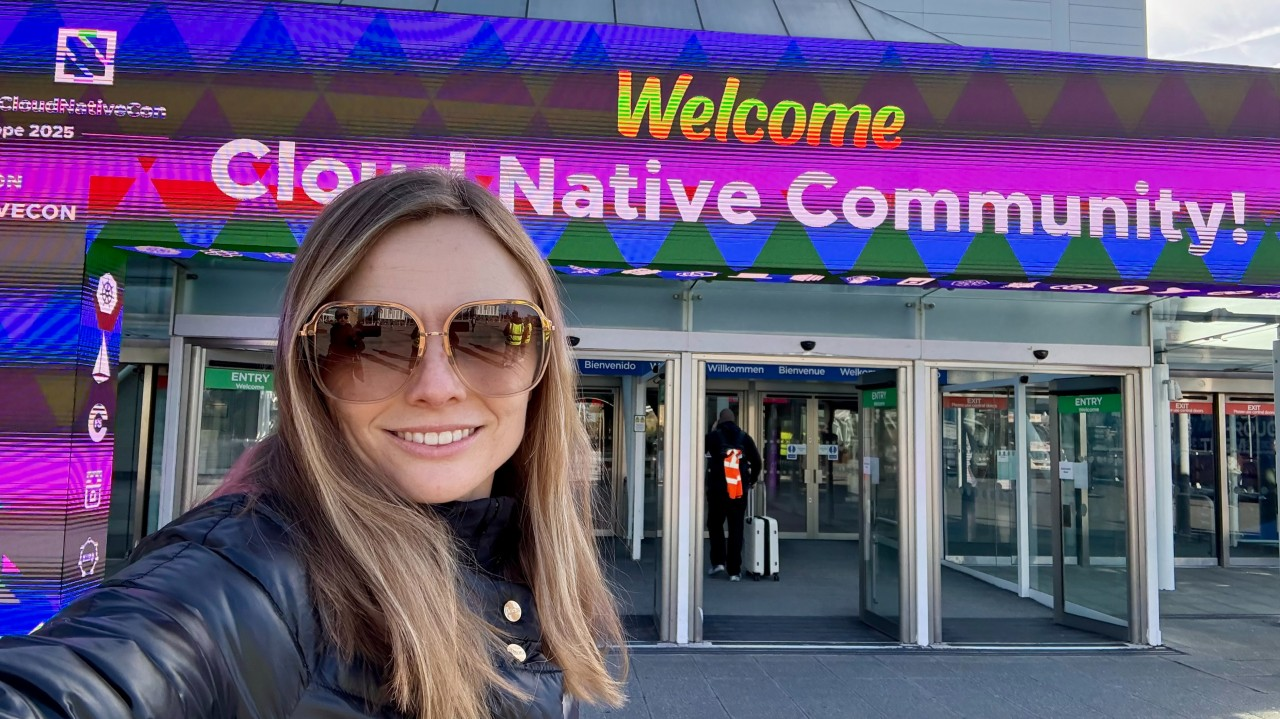
I was recently on a flight from London to San Francisco, returning home from KubeCon Europe, one of the major tech conferences in my industry. Too tired to read yet too alert to sleep, I found myself endlessly scrolling through the in-flight movie selection when I landed on The Great Gatsby (2013) starring Leonardo Di Caprio as Jay Gatsby. As I watched, I couldn’t help but think of the excellent Storytelling class taught by Professor Dan Klein, which I took as part of the Innovative Technology Leader at Stanford in 2023. Gatsby’s narrative arc, the stakes, transformation, and the tension in every scene brought those storytelling principles vividly back to life.
The very elements that have made Gatsby compelling for over a century are the same ones that can turn a customer case study or a pitch deck for a complex piece of B2B software into an irresistible narrative that captures prospective buyers’ attention.
“The Great Gatsby” by F. Scott Fitzgerald, America’s literature masterpiece, has captivated millions of readers since its 1925 publication and was adapted into several movies. This concise, 180-page impactful novel even made Time magazine’s All-time 100 novels list.
The following five lessons sum up what makes Fitzgerald an exceptional storyteller:
Use a clear narrative structure that moves the audience from problem to resolution
Layer sensory detail to make abstract value concrete
Represent big ideas in symbols that makes them memorable
Keep tension alive with surprise and mystery
Close with a universal message that transcends features
Read on for the how and the why, plus a quick checklist that you can apply to Tech marketing, from your next product launch to your event keynote.
First: Apply a narrative structure
A finely crafted narrative structure guides “The Great Gatsby”:
Platform: The historical backdrop sets the stage with the initial circumstances of key protagonists before the main action.
Tilt: A pivotal event disrupts the established order, propelling the protagonist into the story’s central conflict and journey that follows.
Cascading Events: Subsequent challenges and obstacles intensify the story’s tension, complexity, and conflict. With the stakes raised, the narrative propels forward.
Climax/Change: The narrative peaks amidst a tense conflict through the protagonist’s central challenge, resulting in a pivotal change or revelation. This climax (the story’s most dramatic point) resolves the main conflict and tees off the conclusion.
New Reality: The climax’s aftermath shapes the new reality, ties up loose ends, and concludes the story while revealing how the characters’ world has changed, outcomes, lessons learned, and final closure.
Storytelling class at Stanford GSB, 2023
Fitzgerald constructs his novel upon a platform of Jazz Age opulence, setting the stage for the tilt: Gatsby’s obsessive quest for Daisy Buchanan’s love. This quest spirals into cascading events: lavish parties, clandestine meetings and tragic revelations that propel the narrative towards its climax: the confrontation at the Plaza Hotel, leading inexorably to the novel’s harrowing conclusion. In the wake of tragedy, characters must grapple with their new reality.
Why this works
According to Stanford’s professor Jennifer Aaker, “Stories are remembered up to 22 times more than facts alone.” A great narrative pulls your audience in and helps them absorb, remember and act on the information you’re sharing with them.
A superb narrative structure is a must for effective storytelling. Yet to truly captivate, we must go deep and sensory too.
Second: Compel your reader through rich sensory details
Fitzgerald’s narrative brings sensory details: sounds of laughter and jazz from Gatsby’s mansion, movement of his colorful shirts he’s throwing around, visuals of parties draw us to West Egg, a fictional town on Long Island. Through his writing, Fitzgerald crafts a vivid landscape that helps the reader feel the emotions of the main characters, from Gatsby’s relentless optimism to Daisy’s gloomy boredom.
As a storyteller, I’m stunned with Fitzgerald’s use of details to elevate the characters and our sensory experience as his readers. He describes Daisy and Jordan with poetic details:
“dressed in white, and their dresses were rippling and fluttering as if they had just been blown back in after a short flight around the house.”
Great Gatsby movie (2013)
(Gasp. Imagine incorporating metaphors like these in our pitches!) Or the moment Gatsby throws his shirts before Daisy, prompting her tears, blends visual, emotional, and even kinesthetic descriptions wows me. (Imagine sharing raw emotions like these in our storytelling, even a smidgen.) Talk about elevating your message. And making it stick.
Why this works
Neuroscience shows that language filled with vivid sights, sounds, textures and movement does more than delight readers. It lights up the same sensory circuits that fire during direct experience, which in turn deepens attention, improves memory, fuels emotion and nudges buying decisions. [Source: ScienceDirect]
You can make your product even more memorable by adding symbolism and dramatic techniques.
Third: Blend symbolism and themes
Fitzgerald’s use of the green light at the end of Daisy’s dock serves as a potent symbol throughout the novel. It represents Gatsby’s hopes and dreams for the future, particularly his desire to reunite with Daisy. This symbol encapsulates the themes of ambition, longing, and the disillusionment of the American Dream.
“Gatsby believed in the green light, the orgastic future that year by year recedes before us. It eluded us then, but that’s no matter—tomorrow we will run faster, stretch out our arms farther…. And one fine morning——”
This quote captures the perpetual and untethered pursuit of dreams that I find quintessentially American. Whenever I read it, I think of the pioneers and their tenacity, grit and perseverance that I found so captivating when watching Western movies as a kid that grew upon the other side of the world, in Poland, during a time of massive change and new beginnings.
Why this works
Symbols like Gatsby’s green light work because the brain sees them as shortcuts that trigger emotion. In enterprise software, a strong visual like a logo or icon (or a minimalist architecture diagram) can do the same. It taps into the part of the brain used to recognize faces, making it instantly recognizable. This helps people understand value quickly and with less effort. A great visual shows what your product does without making the viewer think too hard. [Source: Designing for recognition by Janine (Nock) Rosado]
DiCaprio’s GIF of Gatsby lifting a champagne glass has become the visual shorthand for Fitzgerald’s book.
Fourth: Utilize dramatic techniques
Fitzgerald’s use of surprise, suspense, mystery, and secrets keeps the reader engaged and enhances the storytelling. These elements create a sense of unpredictability, drawing readers deeper into the story as they seek to uncover hidden truths and anticipate outcomes. Integrating these techniques into your storytelling can captivate your audience, keeping them invested in the narrative from beginning to end.
Dramatic techniques including surprise, suspense, mystery, and secret enchant us and deepen an unpredictable tale. Memorable quotes capture the novel’s theme on the longing and elusive nature of the American Dream.
“Can’t repeat the past? Why, of course you can!”
Gatsby asserts, and with that, reminds us of the American’s unique confidence and ability to reinvent or recreate on a whim, a quality I adore about America and don’t quite find elsewhere.
Why this works
A mid-story twist grabs your audience’s attention and ensures they’ll more likely to remember your message. When the audience encounters information that breaks its prediction, it opens a window for stronger long-term memory formation. [Source PMC]
Fifth: Share a universal message
“The Great Gatsby” demonstrates the power of stories that, while rooted in a specific time and place, speak to universal human experiences and emotions. The novel’s adaptability to different eras through film adaptations underscores its timeless appeal and the enduring relevance of its themes. Crafting stories that tap into universal truths and emotions can ensure they resonate across different audiences and stand the test of time.
This is the opening line of F. Scott Fitzgerald’s “The Great Gatsby,” setting the tone for the novel’s exploration of themes such as privilege, judgment, and empathy.
“In my younger and more vulnerable years my father gave me some advice that I’ve been turning over in my mind ever since. ‘Whenever you feel like criticizing any one,’ he told me, ‘just remember that all the people in this world haven’t had the advantages that you’ve had.’”
Why this works
In enterprise software marketing, weaving universal messages (like the advice in Gatsby) builds a bridge between abstract technology and real human desire of belonging, purpose, or progress. A message such as e.g. Vercel‘s “Go ahead, ship on Friday” keeps the story sticky long after your pitch meeting.
Vercel ad in San Francisco, 2024
Bringing Gatsby’s lessons to Tech Marketing
As my flight descended into San Francisco, I reflected on how these storytelling principles could elevate my next marketing campaign. Contrary to the notion that Tech Marketing is all about listing features, the best marketers tell stories of transformation. And these stories speak to deep, human needs.
Like Gatsby’s green light, our products symbolize aspirations and possibilities. The tension between where our users are today and what they hope to achieve tomorrow creates the same narrative drive that fuels Fitzgerald’s masterpiece. Whether we’re writing the next great novel or a compelling launch campaign, the goal is the same: to connect, inspire, and offer a glimpse of a better future.
Below is a five-step playbook for turning any complex B2B pitch into a Gatsby-grade narrative buyers remember:
✅ Narrative structure: guide readers from problem → pivotal complication (stakes rise) → solution → measurable results
✅ Sensory details: turn metrics into moments your audience can see, hear, or feel, make them tangible vs. abstract
✅ Symbolism & theme: repeat one memorable image or punchline that embodies your promise
✅ Memorable reveal: drop a surprising fact or twist midway to reignite attention and prove credibility
✅ Universal message: close by linking the outcome to a shared aspiration that outlives any single feature
As a technology marketer, I’ve witnessed the Gen AI revolution from its inception. In early 2023, I crafted an enterprise narrative for Google Cloud, helping our global salesforce inspire customers to adopt this technology. I’ve seen AI evolve significantly: from chatbots writing silly poems to answering medical questions and guiding students in physics. Today, AI can understand, reason, and create across various inputs like text, images, audio, and video. I’m excited about AI’s potential to accelerate marketing innovation.
Now, as the VP of Marketing at Synadia, the startup on a mission to connect the world, I’ve observed even more. At a recent webinar for 50+ portfolio companies at Forgepoint Capital, I shared these insights, which I’m highlighting in this week’s newsletter. Thank you Tanya Loh for the opportunity!
As a technology marketer, I’ve witnessed the Gen AI revolution from its inception. In early 2023, I crafted an enterprise narrative for Google Cloud, helping our global salesforce inspire customers to adopt this technology. I’ve seen AI evolve significantly: from chatbots writing silly poems to answering medical questions and guiding students in physics. Today, AI can understand, reason, and create across various inputs like text, images, audio, and video. I’m excited about AI’s potential to accelerate marketing innovation.
18 months ago, I visualized gen AI as my alter ego, a game changer amplifying our strengths and overcoming our weaknesses. I hoped that for creative and curious people who tend to procrastinate and get bored easily, Gen AI would make life easier by handling the repetitive and mundane tasks we dislike.
Gen AI amplifies many our strengths and overcomes our weaknesses
Today, I can say that my prediction turned out to be true. I see three main buckets where Gen AI helps us in marketing:
✅ Expand your expertise
✅ Jump-start your creativity
✅ Offload your marketing tasks
I’ll illustrate how I’ve used Gen AI in marketing through stories with Google and Synadia.
Gen AI quickly expands our expertise and teaches us new skills
First, let me tell you how Gen AI helped me hit the ground running from Day 1 at Synadia and how it continues to my invaluable sidekick. I created a custom GPT to teach me about Synadia’s product portfolio. I trained it using public documentation. I knew the learning curve on the product built by the world’s brightest distributed systems engineers would be steep. Asking my personal GPT questions promptly got me up to speed.
Here’s another example. Imagine hearing a new acronym during a meeting with your engineers. Instead of interrupting the flow and making everyone wait while someone explains it, my Synadia bot, trained on github.com/synadia-io, immediately clarifies it for me. This way, we can stay focused on discussing our vision for building the ultimate platform for distributed applications without sidetracking the meeting.
My other story happened at Google. You may have seen ‘The Tale of a Model Gardener’ video, a humorous cartoon about Gen AI’s ability to help enterprises achieve their business goals. Gen AI accelerated the creative process for this video we launched ahead of #GoogleCloudNEXT in August 2023. Here’s how.
The idea hit me when cycling between San Francisco’s Marina District and Financial District to Google’s office. I wondered: “How do I explain concepts in AI, such as augmentation and prompt engineering, in fun, approachable ways?” The idea of a cartoon video surfaced but how to start, having never written a video script nor cartoon?
With just 30 minutes until my next meeting, I instructed Bard (now #GoogleGemini). “Hey, Gemini, write me a movie script about X.” I added three sentences with my idea. In minutes, I got a fully developed movie script, beautifully formatted by scenes. I perfected things with small additional prompts. Google #Vertex AI, an end-to-end ML platform, helped me generate images. I stitched together a script draft with some images and sent it to my creative colleagues–all within 30 minutes–and they really liked the idea of a cartoon. Though they had different ideas about what the cartoon ought to explain and how it ought to look; the concept landed from my Gemini experiment.
This triumph really shows what Gen AI brings us as marketers. I got a solid movie script within minutes, with no prior experience in building such things. I didn’t waste the idea, which became an important, valuable deliverable for the company.
Have you seen this fairy tale 🐇🥕🥧 about gen AI?
Gen AI sparks our creativity
I want to expand on how I use Gen AI to jumpstart my creativity, especially when short on time. As you can imagine, only a few weeks into the Synadia role, I’m working on our positioning and messaging. I brainstorm with my small but mighty marketing team, my product and engineering team, and my founder and CEO. I also brainstorm with Gen AI, especially when everyone’s busy. (My bot is always available.)
As the proud granddaughter of a professor of physics and a prolific dressmaker who whipped up gorgeous fashion from his patterns, I’ve long loved prototyping and testing my ideas. My mind works best when reacting to prototypes vs thinking about them. Prior to Gen AI, we had to write or sketch out our prototypes. Gen AI requires a simple prompt for a full document which can spark more ideas and creativity in ourselves and others. (We saw this with my design team at Google and ‘The Tale of a Modern Gardener’ AI-generated cartoon script.) For that same reason product demos are worth 1000 slides. Show, don’t tell.
Have you read our
Gen AI offloads small tasks
Gen AI also can offload small, repetitive, mundane tasks to free us up for more strategic thinking and exciting tasks. At Synadia and Google, Gen AI has helped me:
Jump-start projects. A custom prompt to generate case studies from our many great customer stories captured in blog posts and videos scaled our small team’s output.
Generate images. The early images for my first cartoon script for ‘The Tale of a Model Gardener’, weren’t perfect, but brought the narrative to life.
Edit content and minor things/ideas. While preparing my creative idea for the design team, I lacked the time for editing parallel construction in my lists or capturing typos. My bot took care of that so I could focus on creativity. Writing uses the creative part of our brain; editing uses the analytical. Mixing the two puts the breaks on the creative process so I like to offload the latter to my bot.
Gen AI helps us feel more experimental
Gen AI never lets an idea go to waste. When you’re pressed for time, quickly producing a first prototype helps your colleagues provide feedback faster. While you might discard that initial version, it speeds up the journey to the final product.
If a picture is worth a 1000 words, a prototype is worth a 1000 thoughts
Sometimes, a colleague may take your prototype in a completely new direction. I find this process empowering and encouraging. Each strong reaction, even a negative one, means I’m one step closer to the ideal solution.
Innovation thrives on collaboration and diversity, not egos. Gen AI helps create an environment where ideas evolve and improve through teamwork, making our solutions stronger and more innovative.
The drawbacks and obstacles with Gen AI
Gen AI has some drawbacks. A few I’ve encountered include:
Ubiquitous language. The bar for quality content has never been higher and savvy readers detect and tune out AI-generated if repetitive, generic, and vague. We’ve seen content overload for close to two years now. Cutting through that noise requires high-quality content.
Flawed responses. Use AI responsibly and not verbatim. AI bots are not deterministic. Our bot’s responses may be quick, but sometimes contain significant errors in reasoning. I wrote about this problem in my post on how I turned a daunting 150+ page-long voter pamphlet into a handy cheat sheet for the San Francisco elections. I prompted: “Summarize all the propositions on the March 5th 2024 SF election ballot with their top arguments for and against in a 3-column table using the voter pamphlet as the data source.” The bot’s quick response impressed me. But I found reasoning errors and one argument was entirely made up by the bot. Always check your results.
No slide fixes! Gen AI will not do what we dream of (yet): unify our fonts and texts in our slide decks 😂.
Change in Gen AI is unprecedented. I’ve seen nothing like this growth in my 15+ years in tech. The new features from OpenAI, Google or Anthropic are just the tip of AI innovation. Many startups work towards perfecting Gen AI as well. In the meantime, discovering gen AI feels amazing and I wonder how we lived without it.
Looking ahead
Despite all that Gen AI brings us as marketers, it cannot compete with human storytellers. Gen AI does not substitute well-written, well-narrated customer stories. Even OpenAl looks for interesting use cases of their products exploring new features in unexpected ways. So let’s provide them. A recent LinkedIn post on me using ChatGPT and a Peloton app to rediscover German became one OpenAI reposted, which sparked a wonderful conversation on learning new languages with Gen AI, all from a lighthearted, personal story connecting with technology, efficiency, and learning.
The previous edition of this newsletter reposted by Open AI
This moment reminds me: All Tech brands, even the Silicon Valley hottest companies like OpenAI, seek interesting stories on how we use their products in exciting, unexpected ways to start a community conversation.
For now, Gen AI cannot do that nor can it replace a great writer or story. That’s our opportunity and another way we can best partner with Gen AI as marketers and as storytellers.
➡ How do YOU use Gen AI in Marketing? Share your thoughts in the comments! ✍👇
➡ Need a hand getting started? Shoot me a message! ✍ ✉
I’m a Marketing Executive, an astute influencer, panelist, and public speaker with recent appearances on Harvard Business Review (HBR). I live and work in San Francisco.





 Tech Surprises